
Wearable Data and Life Insurance: What Fitness Trackers Reveal

Wearable Data and Life Insurance offers a “win-win” scenario: policy holders gain lower premiums while insurers gain more accurate data.
In 2026, the watch on your wrist is doing more than counting steps. However, it is testifying to your life expectancy.
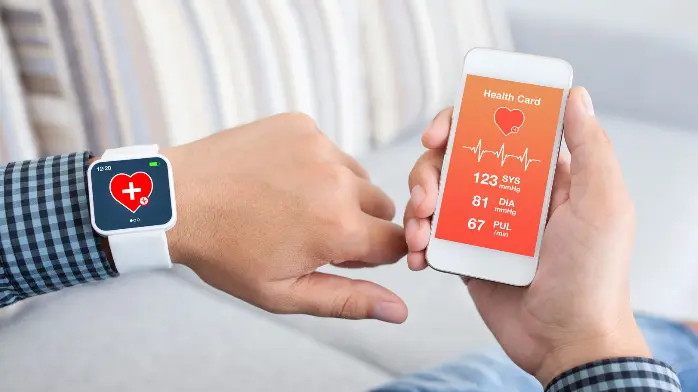
Meanwhile, as the insurance industry shifts from “static underwriting” (one-time medical exams) to “dynamic monitoring,” the data from your Fitbit, Apple Watch, or Oura Ring can becoming a factor in how your premiums are calculated.
Table of Contents
- The Apple Watch That Raised a Patient’s Premium
- How Insurers Are Using Your Wearable Data and Life Insurance
- The Legal Gray Zone of Health Tracking
- 3 Ways to Protect Your Wearable Data and Life Insurance Privacy
- Insurers Leading the Wearable Revolution
- The Future of “Behavioral Underwriting”
- 4 Steps to Get Fair Rates
- Conclusion: Wearable Data and Life Insurance offers a “win-win” scenario
The Apple Watch That Raised a Patient’s Premium
For example, a normal man’s life insurance application can be denied after his insurer can access:
- Resting heart rate spikes (128 bpm during sleep)
- Irregular activity patterns (3-week sedentary streaks)
- Blood oxygen dips (88% avg. vs. 92% baseline)
Then, all can be pulled from his Apple Health data, shared unknowingly via a “wellness discount” program.
How Insurers Are Using Your Wearable Data and Life Insurance
5 Metrics That Could Deny You Coverage
- Sleep Consistency
- Heart Rate Variability (HRV)
- Activity Minutes
- Stress Score
- Garmin/Whoop can and do track stress.
- Recovery Time
- Oura Ring tracks recovery.
The Legal Gray Zone of Health Tracking
What They Can vs. Can’t Use
| Data Type | Used Today? | Legal Challenge |
|---|---|---|
| Step Count | Yes (John Hancock) | None |
| Blood Pressure | Only with consent | The legal landscape regarding health data and AI in healthcare is evolving, with ongoing patient concerns about transparency and consent. |
| Menstrual Cycles | – | Virginia passed legislation in February 2024 to protect digital menstrual health data from search and seizure, indicating existing legal challenges and risks |
While surveys vary, more recent data indicates that 43% of consumers are willing to share data for insurance discounts if transparent (March 2026), or over 54.5% are willing for a more-tailored policy (August 2025). The 40% figure was reported in the 2024 Insurance Barometer Study.
3 Ways to Protect Your Wearable Data and Life Insurance Privacy
1. Opt Out Strategically
- Keep discounts but block sensitive metrics:CopyDownloadApple Health → Data Access → Revoke insurer permissions (Allow steps/sleep only)
2. Wearable Data and Life Insurance : Game the System (Legally)
- Wear tracker only during workouts (Artificially inflates activity scores)
- Reset sleep data before physicals (Forces manual input)
- Use “dumb” devices for medical tests (Old-school blood pressure cuffs)
3. Demand Transparency
Check also : Term Life Insurance : What It Is, How It Works, and The Best for You !
Insurers Leading the Wearable Revolution
| Company | Program | Savings | Catch |
|---|---|---|---|
| John Hancock | Vitality | Up to 25% | Requires annual physical |
| Oscar Health | Motion | Various wellness and rewards programs | Including earning Amazon Gift Cards for meeting daily step goals |
The Future of “Behavioral Underwriting”
Preemptive Move: Buy traditional whole life now before algorithms dominate.
4 Steps to Get Fair Rates
- Reset Your Data
- Delete 6 months of unhealthy patterns before applying
- Choose the Right Device
- Garmin > Fitbit (However, search and find the best for you)
- Time Your Application
- In short, apply after 3 months of “ideal” metrics
Conclusion: Wearable Data and Life Insurance offers a “win-win” scenario
In conclusion, as we move further into 2026, the traditional “one-size-fits-all” insurance model is rapidly becoming obsolete. After that, the integration of wearable technology offers a “win-win” scenario: policyholders gain lower premiums and better health insights, while insurers reduce their risk through more accurate data. However, as the line between personal health and financial profile continues to blur, the responsibility falls on the consumer to manage their digital footprint with as much care as their bank account.
Moreover, the shift toward data-driven transparency is best summarized by Mark Greisiger, who reminds us that in the digital age, your habits are your most valuable currency. Then, he noted in a recent industry forum:
“In the modern insurance ecosystem, data is the new doctor. Your wearable doesn’t just track your pulse; it tracks your financial reliability. The most successful policyholders of 2026 will be those who treat their health data as a strategic asset, not just a digital convenience.”
In short, by staying informed and maintaining “Data Hygiene,” you can ensure that your fitness tracker works for your wallet, providing the legal and financial protection you deserve in an increasingly connected world.
After that, don’t forget to check : Whole Life Insurance – What It Is, How It Works, and The Best for You
